

Almost every week someone books in for a shoulder that will not loosen up. They point to the same place near the top of the shoulder blade, describe the same dull ache by mid-afternoon, and tell us they have tried stretching it every day for a month. The stretching is not the problem. The location is.
The muscles that lift and stabilise your shoulder blade anchor onto your ribs and your mid-back. When that part of the spine stops moving well — which is what happens after months of sitting, driving, or holding a baby on one hip — the shoulder ends up doing work it was never meant to do on its own. It gets tight because it is overloaded, not because it is short.
What we look at first
Before any hands-on work, your therapist watches how you move. Not a lengthy examination — a few minutes that tells us where the restriction actually lives:
- How far your ribs move when you take a full breath
- Whether your shoulder blade glides or hitches as your arm goes overhead
- How much rotation you have through the mid-back, left versus right
What treatment looks like
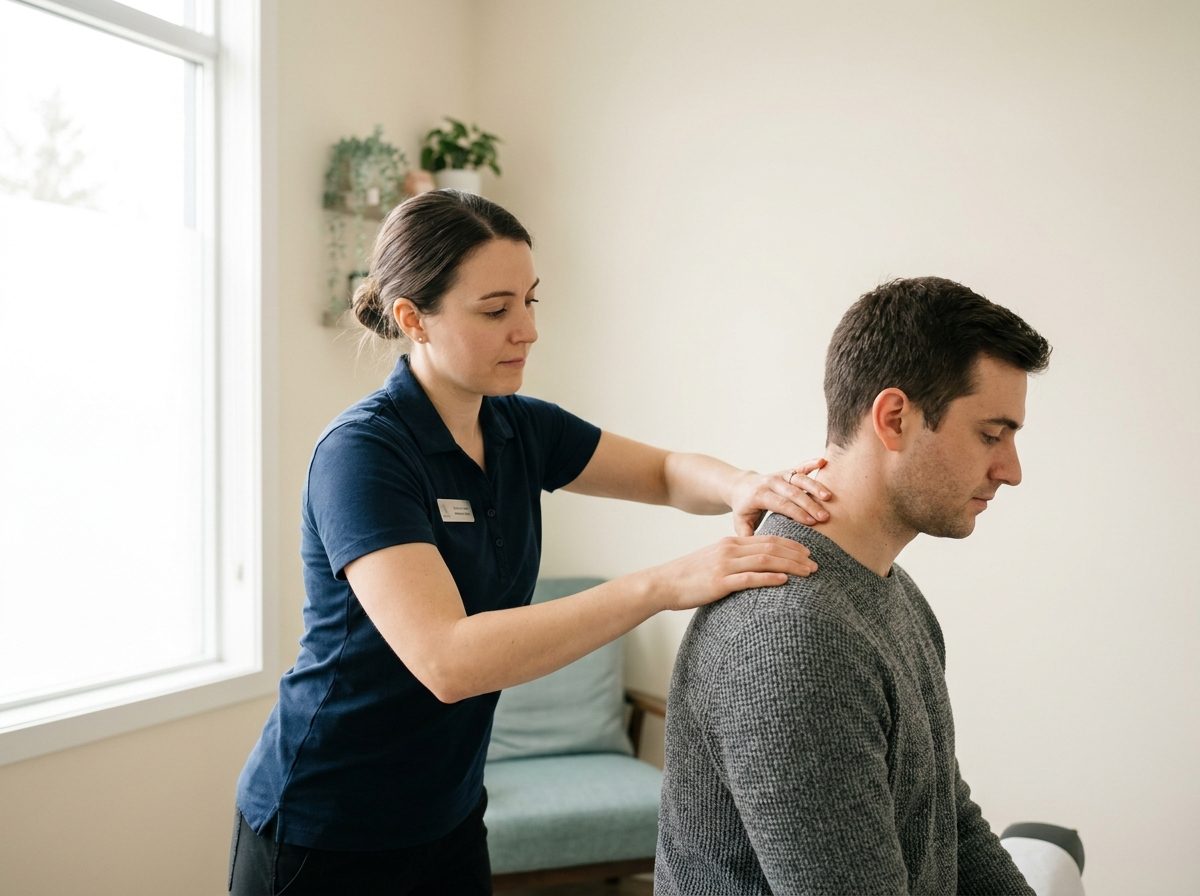
If the mid-back is the limiting factor, most of the session goes there: work through the tissue between and under the shoulder blade, along the rib attachments, and into the muscles that run down the side of the spine. The shoulder itself usually gets less attention than people expect, and feels better anyway.
If a shoulder loosens for two days and tightens again, the shoulder was never the problem.
You leave with one or two things to do at home — usually a rotation drill and a breathing cue rather than a stretch — and a realistic idea of spacing. For something that has been building for months, weekly for two or three visits and then tapering is normal. Nobody needs to come in forever.
When to get it looked at
Book in if the ache has outlasted a couple of weeks, if it wakes you at night, or if it keeps returning to the same spot after every good week. If there is numbness, weakness or pain that came on after a fall or a car accident, say so when you book — that changes how we assess you, and ICBC claims are covered without a referral.
And if you are not sure whether massage therapy is the right call at all, call the clinic. We would rather talk it through for five minutes than have you book the wrong thing.
General information only, not a diagnosis. If something is worsening, see a healthcare professional.
← All articles